Role-based access
Residents, admin, security, board, and field staff receive only the permissions they need. The staff app hides entire modules — not just buttons — when a role cannot act.
Security, privacy & reliability
Final security controls and SLA commitments are documented in the implementation and service agreement. The architecture is already built for least privilege, auditability, and continuity.
Residents, admin, security, board, and field staff receive only the permissions they need. The staff app hides entire modules — not just buttons — when a role cannot act.
Resident and staff apps are separate bundles with separate token audiences. Staff credentials never call resident mint APIs. Board users enter a distinct portal shell.
Important actions and approvals are traceable: who approved a visitor, who resolved an incident, who changed a role. Dual-control exists for sensitive IAM changes.
Encryption in transit, controlled access, and secure credential handling. Resident and staff tokens live in secure device storage — not ordinary preferences. Web sessions use httpOnly cookies.
Automated backups and documented recovery procedures. Responsibilities are written into the service agreement, not implied by hosting.
Application and infrastructure monitoring with incident procedures. Release builds can pin certificates on mobile. Logging redacts authorization headers and sensitive fields.
The community previously lost digital capability when a property manager changed. Community Connect is structured so that does not happen again: the condominium owns the data and the policies; the provider operates the platform.
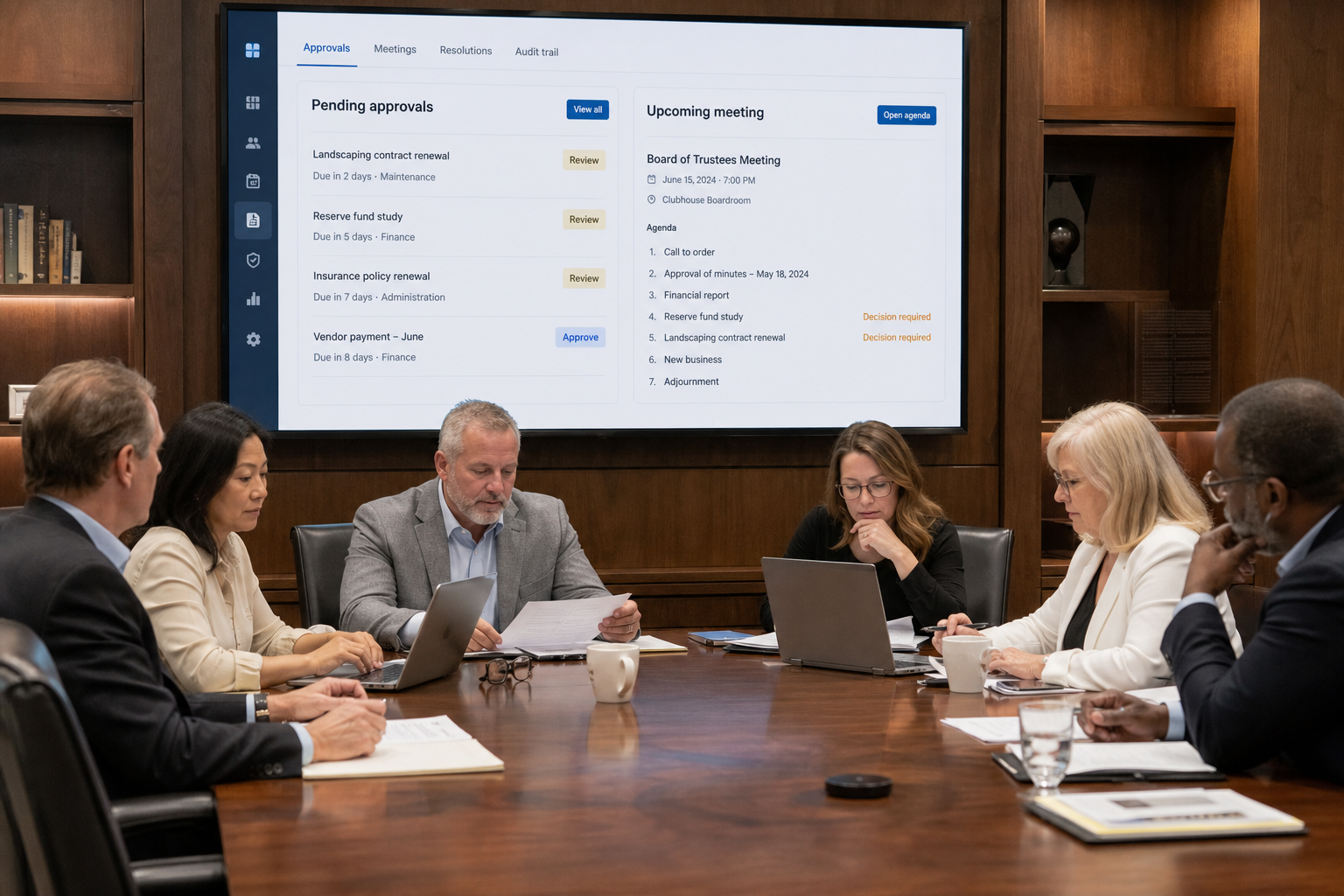
Confirm interest, run a discovery workshop, agree Phase 1, then pilot. The objective is not to buy an app — it is to establish a reliable, community-controlled operating platform.